CEF Transport Funding
CEF Transport funding: secure EU support for transport infrastructure and mobility projects. The European Commission is preparing a new CEF Transport Reflow Call with an expected budget of €1.1 billion and a deadline on 6 October 2026.
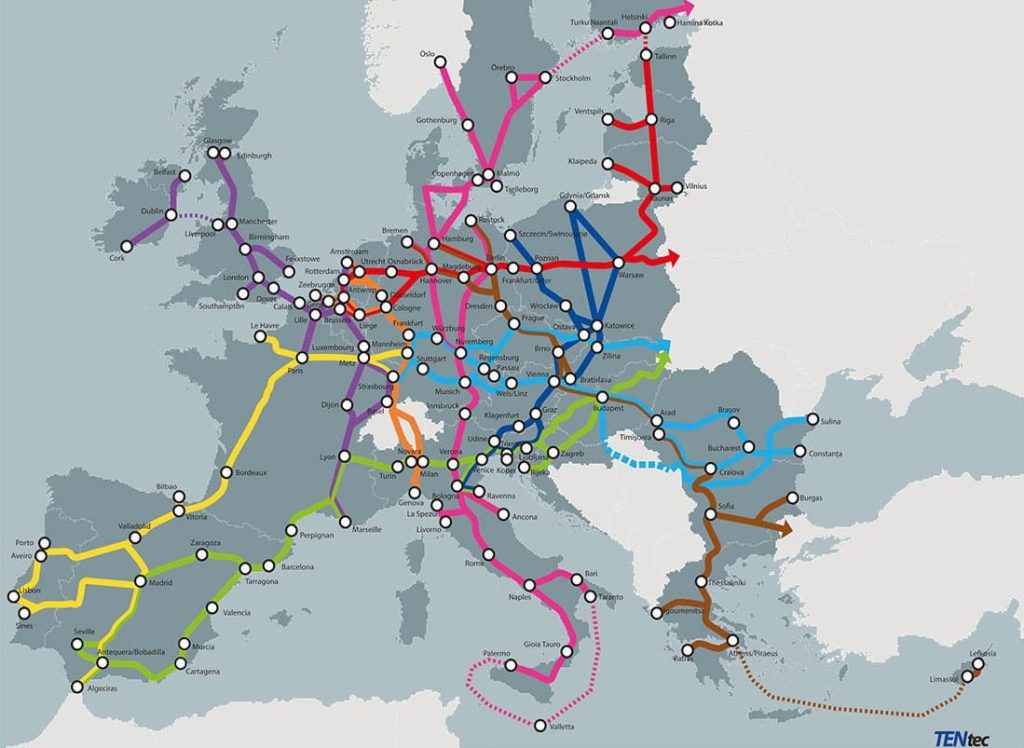
CEF Transport supports infrastructure projects that strengthen the Trans-European Transport Network (TEN-T), accelerate transport decarbonisation and improve connectivity across Europe.
Zattia helps public authorities, infrastructure managers, ports, airports, rail operators and private companies prepare competitive CEF Transport proposals and manage funded projects.
CEF Transport Reflow Call 2026
at a glance
What is CEF Transport?
CEF Transport is part of the Connecting Europe Facility (CEF), the European Union funding programme supporting strategic transport infrastructure across the Trans-European Transport Network (TEN-T).
The programme finances projects that improve cross-border connectivity, modernise transport infrastructure, support alternative fuels deployment and contribute to the decarbonisation of the European transport system.
CEF Transport supports investments in rail, ports, airports, inland waterways, road infrastructure and multimodal transport hubs.
What projects can receive CEF Transport funding?
CEF Transport supports both the development of new transport infrastructure and the rehabilitation and upgrading of existing facilities.
To be eligible for CEF Transport funding, projects must contribute to the development of the Trans-European Transport Network (TEN-T), which includes:
1. Rail infrastructure
- TEN-T rail corridors
- ERTMS deployment
- Rail freight infrastructure
- Cross-border rail projects
- Mobility hubs
- Passenger intermodality
- Intelligent transport systems
- Port modernisation
- Shore-side electricity
- Alternative fuels
- Green shipping infrastructure
4. Airports
- Sustainable airport infrastructure
- Alternative fuel deployment
- Energy efficiency investments
5. Alternative fuels infrastructure
- Hydrogen refuelling
- Electric charging infrastructure
- AFIF-related investments
Priority areas for the CEF Transport Reflow Call 2026
Although the final work programme is subject to confirmation, the upcoming Reflow Call is expected to focus on projects that can rapidly contribute to the completion of the TEN-T network and the decarbonisation of transport.
Priority areas are expected to include:
- Railway (including High-Speed rail) infrastructures.
- New or upgraded inland waterways infrastructures.
- Port and airport sustainability.
- Alternative fuels infrastructure for roads.
- Road digitalisation.
- Dual-use infrastructures.
- Adaptacion of cross-border checks.
FOR 2021-2027
Who
can apply?
Public authorities
Relevant services: Proposal development, Funding strategy or Project management.
Private companies
Relevant services: Partner search, Proposal writing or Project implementation.
Infrastructure managers
Relevant services: Cost-benefit analysis, Technical proposal development or Financial modelling.
Ports and airports
Rail operators
Relevant services: ERTMS deployment, Decarbonisation projects or Consortium building.
Do you have an idea in mind?
Our team helps make your projects a reality and advises you along the way.
How can we
help you
1. Preliminary eligibility analysis:
We assess your project idea from regulatory, technical, and financial perspectives.
We assist you in drafting the proposal, writing it, and completing all necessary annexes.
3. Contact with stakeholders:
We help you engage public authorities and financial bodies to gather the support and annexes to the proposal submission.
4. CBA analysis:
We perform the cost-benefit analysis (and report) to ensure financial and economic eligibility.
5. Contract preparation
We support in the preparation of the Grant Agreement with CINEA.
6. Administrative management
After the Grant Agreement is signed, we support administrative, legal, and financial tasks.
Our figures in CEF Transport
+50
EU proposals submitted to the
CEF Transport programme
67%
Success rate in the
CEF Transport programme
86%
Success rate in the
AFIF priority
180M€
Return for our clients in the
CEF Transport programme
How much funding can CEF Transport provide?
Investment projects typically receive funding covering up to 30% of eligible costs.
Depending on the action type, funding may increase to:
- 50% for selected studies and priority actions
- 70% for some cross-border projects
- Up to 85% in eligible Cohesion Fund countries
Special funding mechanisms
Certain priorities use unit-based grants rather than reimbursement of actual costs.
This approach currently applies mainly to:
- AFIF (Alternative Fuels Infrastructure Facility)
- ERTMS deployment projects
Our projects
CEF-T-2024+-AFIF (cut-1)
DRIVE
Deployment of Reliable Infrastructure for Vehicle Electrification
CEF-T-2024-SAFEGEN
DIGIROAD
Smart monitoring systems to improve Bizcay road infrastructure resilience to climate change and natural disasters
Total amount granted: 1.188.955 €
EF-T-2024+-AFIF (cut-1)
ECOhynet
Deployment of a network of hydrogen fuelling stations of 1.000kg/day of capacity in Spain
Total amount granted: 8.031.900 €
“At Zattia, we bring extensive experience in this investment funding mechanism, from Ten-T calls (2011–2013) to CEF-T (2014–2024), interacting with CINEA, NCPs, and financing bodies. This expertise enables us to prepare solid candidatures for public and private organizations, advancing sustainable, safe, digital, and resilient transport infrastructure across Europe.”
Sergio Úbeda
Senior Consultant in European Projects and Mobility Expert
Want to keep up to date with the CEF Transport latest news?
More about
Connecting Europe Facility (CEF)
The CEF Digital programme is part of the broader Connecting Europe Facility (CEF), a European Union program designed to support and fund infrastructure projects across Europe.
The program has an allocated total budget of €33.7 billion.
How can we help you?
Our team can advise you on any question you might have, so feel free to contact us, no strings attached.
FAQ about CEF Transport
What is CEF Transport?
CEF Transport is the transport pillar of the Connecting Europe Facility (CEF), the European Union programme that supports strategic transport infrastructure projects across the Trans-European Transport Network (TEN-T). It funds projects that improve connectivity, strengthen cross-border links, accelerate transport decarbonisation and enhance the resilience of European transport systems.
What is the CEF Transport Reflow Call 2026?
The CEF Transport Reflow Call 2026 is an additional funding opportunity expected to make around €1.1 billion available for transport infrastructure projects. The call is expected to focus on mature projects that contribute to TEN-T completion, sustainable mobility and transport decarbonisation.
Who can apply for CEF Transport funding?
CEF Transport is open to public authorities, infrastructure managers, ports, airports, rail operators, logistics organisations and private companies involved in transport infrastructure projects located on the TEN-T network.
What types of projects are eligible under CEF Transport?
Eligible projects may include rail infrastructure, ports, airports, inland waterways, alternative fuels infrastructure, multimodal transport hubs, intelligent transport systems and cross-border transport connections.
What is the TEN-T network?
The Trans-European Transport Network (TEN-T) is the EU’s strategic transport network connecting major cities, ports, airports and logistics hubs across Europe. Most CEF Transport projects must demonstrate a clear contribution to TEN-T objectives.
How much funding can a CEF Transport project receive?
Funding rates depend on the type of action and project priority. Investment projects generally receive up to 30% of eligible costs, while studies, cross-border projects and projects in specific priority areas may receive higher co-financing rates.
Does CEF Transport support rail infrastructure projects?
Yes. Rail infrastructure is one of the main priorities of the programme. Eligible projects may include ERTMS deployment, freight corridors, cross-border rail links, rail network upgrades and projects that contribute to sustainable mobility.
Does CEF Transport support alternative fuels infrastructure?
Yes. The programme supports infrastructure for electricity, hydrogen and other alternative fuels. Many of these investments are funded through the Alternative Fuels Infrastructure Facility (AFIF), which forms part of the CEF Transport framework.
Can private companies participate in CEF Transport projects?
Yes. Private companies can participate as beneficiaries or project partners, depending on the call conditions and the nature of the project. Collaboration with public authorities and infrastructure managers is often required.
How long does it take to prepare a CEF Transport proposal?
Preparation time depends on project maturity and consortium size. For most projects, proposal development should start at least three to six months before the submission deadline to allow sufficient time for technical, financial and administrative preparation.
What are the main evaluation criteria for CEF Transport proposals?
Projects are assessed based on their maturity, contribution to TEN-T objectives, European added value, impact on connectivity and sustainability, technical quality, implementation capacity and cost-effectiveness.
How can Zattia support a CEF Transport application?
Zattia supports organisations throughout the entire project lifecycle, from opportunity assessment and proposal development to cost-benefit analysis, grant agreement preparation and project management. Our team combines expertise in European funding, transport infrastructure and transport decarbonisation projects.
What are the expected priorities of the CEF Transport Reflow Call 2026?
Although the final work programme is subject to confirmation, the call is expected to prioritise projects that accelerate the completion of the TEN-T network, support rail infrastructure, deploy alternative fuels infrastructure, improve port and airport sustainability, strengthen military mobility and contribute to transport decarbonisation.